
Yes—biophilic office design can improve productivity, but research findings are not a guaranteed uplift for your office. For a 2026 workplace project, combine access to nature with suitable lighting, acoustic control and a measured trial; adding plants alone does not establish a business result.
TL;DR
- Biophilic office design productivity research supports testing greenery, not promising a universal performance uplift.
- University of Exeter researchers reported productivity gains in plant-enriched offices; the result is specific to the studied settings.
- Prioritise usable daylight, comfortable workstations and maintained greenery over decorative impact.
- Measure work quality and output before extending a biophilic office design pilot.
Why this matters
An attractive office and a productive office are not the same thing. Employees can like a planted workspace while still struggling with speech noise, screen reflections or an uncomfortable temperature.
If you are briefing Giant Leap, describe the work the space must support before choosing its finishes. A brief built around concentrated analysis needs different decisions from one built around frequent calls and group discussions.
Treat biophilic design as a workplace intervention, not a productivity guarantee. In 2026, the decision is not whether greenery looks appealing; it is whether the proposed changes improve conditions without introducing new problems.
Can biophilic office design really improve productivity?
Research supports a qualified yes. In The Relative Benefits of Green Versus Lean Office Space: Three Field Experiments, published in the Journal of Experimental Psychology: Applied, Marlon Nieuwenhuis and colleagues investigated plant-enriched workplaces. The University of Exeter's account of the research reported productivity improvements of up to 15% in the studied settings.
That is evidence for testing office greenery, not permission to forecast a 15% increase in revenue, sales or output across your business. The measured tasks, workplaces and experimental conditions define the finding's scope.
The research also does not prove that every feature sold as biophilic design produces the same result. A potted plant, a garden view and botanical wallpaper are different interventions.
Living plants
- Best for: Introducing visible greenery into occupied work areas
- Main advantage: Plant-enriched offices have direct workplace research behind them
- Main limitation: Plants require suitable growing conditions and ongoing care
Views of vegetation
- Best for: Workstations with a usable outdoor outlook
- Main advantage: Offers visual contact with nature without occupying desk space
- Main limitation: The view depends on the building and workstation position
Daylight with glare control
- Best for: Work areas with windows and adjustable shading
- Main advantage: Connects occupants with changing outdoor conditions
- Main limitation: Uncontrolled sunlight creates reflections and visual discomfort
Nature-inspired finishes
- Best for: Spaces without suitable conditions for living planting
- Main advantage: Adds natural references without horticultural maintenance
- Main limitation: Decorative resemblance is not proof of a productivity benefit
The strongest business case separates evidence about an intervention from assumptions about its appearance. Ask what a proposed feature changes for the person working beside it.
Living plants: test visibility and maintenance together
Living plants are a sensible starting point when you want to investigate the workplace evidence. Their practical advantage is flexibility: you can trial planting in an existing area without treating a complete renovation as the experiment.
Put plants where seated employees can see them without losing usable work surface. Keep circulation routes, shared equipment and access to building services clear. A striking installation that obstructs everyday work defeats the brief.
The disadvantage is responsibility. Someone must check plant health, manage watering and respond to pests or failed planting. Agree on that responsibility before installation rather than assuming general office cleaning includes horticultural care.
Best for: teams that can maintain living greenery and measure its effect in an occupied workspace. Skip a large installation when its care arrangements remain unresolved.
Daylight and outdoor views: protect visual comfort
A window is not automatically a comfortable place to work. Sunlight on a screen, a bright window behind a monitor and poorly positioned desks create different visual problems.
Assess daylight from the employee's seated position. Check what happens when blinds close, when the sun reaches the workstation and when someone needs artificial lighting for detailed work. The design must work throughout normal occupation, not only during a site visit.
Outdoor views also depend on layout. A garden outlook behind a storage wall does little for someone who cannot see it, while a window-facing desk still needs appropriate screen positioning.
Best for: offices where workstation placement and shading can make existing windows more usable. The limitation is building dependence: an interior workspace cannot acquire an outdoor view through decorative specification alone.
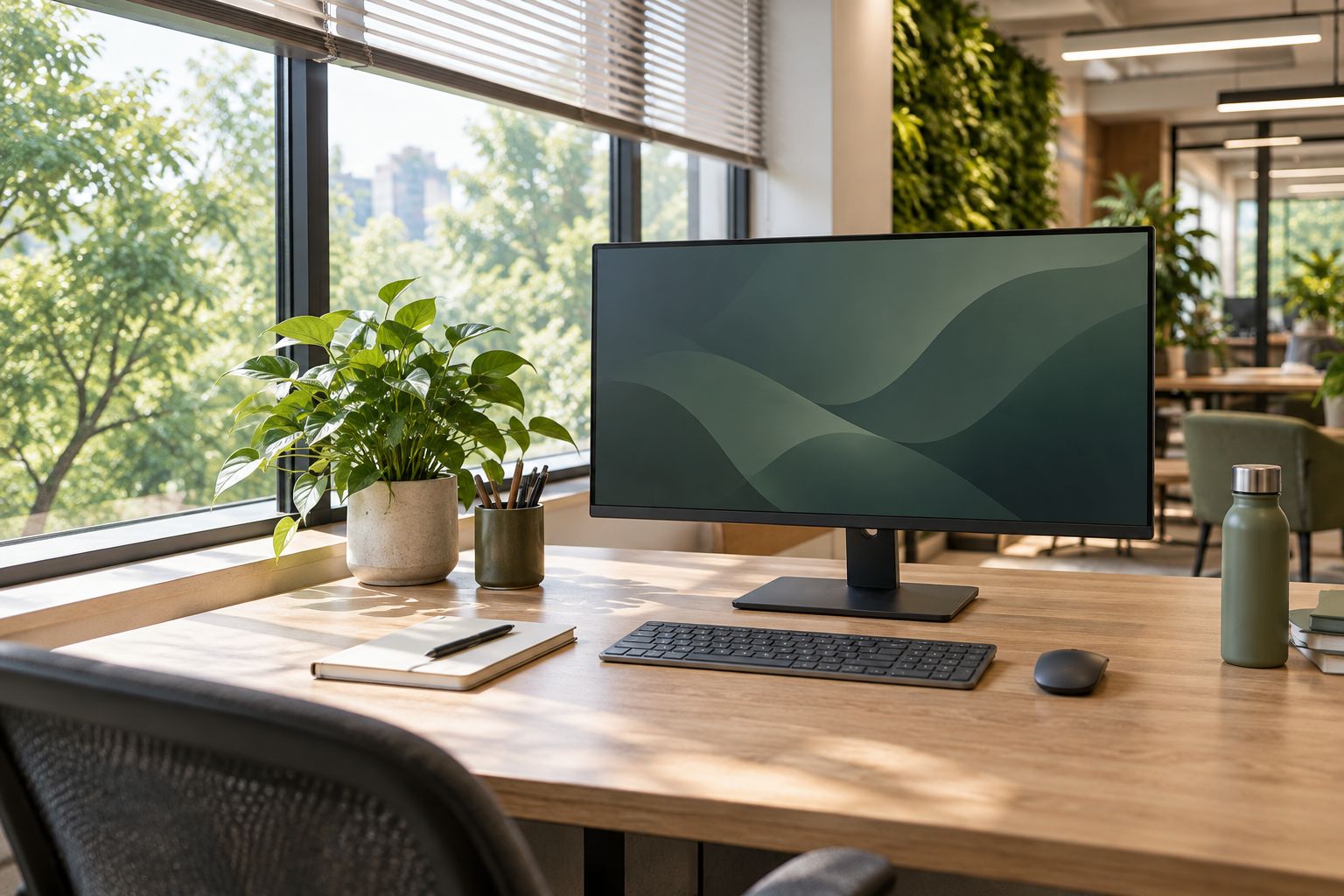
Assess greenery and daylight from the position where someone actually works.
Why biophilic office design productivity results vary
The same design feature does not create the same working conditions everywhere. For your 2026 brief, assess these factors before treating a published result as a target.
- Task fit. Separate focused work, calls and collaborative activity. An overall average can conceal a change that helps one task but disrupts another.
- Visual comfort. Review reflections, contrast and shading alongside access to daylight. More light is not the same as better task lighting.
- Acoustic conditions. Greenery does not remove the need to control speech distraction. Assess acoustic treatment for open-plan offices separately from planting.
- Maintenance. Plant health, watering access and cleaning responsibilities affect whether the intended environment remains usable.
- Exposure and access. Check which employees actually see or use the feature. A planted reception area is not equivalent to greenery beside occupied workstations.
For teams briefing Giant Leap, biophilic office design should support work rather than decorate it. That means allowing a proposed feature to fail the brief when its practical disadvantages outweigh its contribution.
How should you measure a biophilic office design pilot?
Run a bounded trial before approving a wider rollout. A practical starting proposal is 2 working weeks of baseline measurement followed by a 4-week pilot; those are suggested planning periods, not research-established minimums or a promise that an effect will appear.
Extend the observation period when workload varies substantially or the work follows a longer cycle. A short trial during an unusually quiet period does not represent normal operations.
Establish baseline
Choose an outcome linked to real work: completed tasks, processing time, error rate or rework. Record employee feedback separately so that satisfaction does not become a substitute for output.
Define the measure before changing the space. If your team changes what counts as completion halfway through, the comparison loses meaning.
Change one feature
Introduce a clearly described intervention, such as visible desk-area planting. Avoid simultaneously replacing furniture, changing work allocation and rebuilding meeting rooms if you want to understand the planting's contribution.
Keep a record of unavoidable changes. Staffing, software outages and workload shifts can explain a result that initially looks like a design effect.
Compare work
Compare equivalent tasks and working conditions wherever practical. If one period contains routine administration and another contains complex exceptions, raw completion totals are misleading.
Include work quality in the assessment. Faster completion accompanied by more errors is not an unqualified productivity improvement.
Review maintenance
Record whether the proposed planting remains healthy and whether care disrupts working areas. Ask employees about glare, obstruction and comfort as well as their preference for the new appearance.
This turns maintenance into part of the decision rather than an afterthought. A feature that works only with unresolved operational effort is not ready to expand.
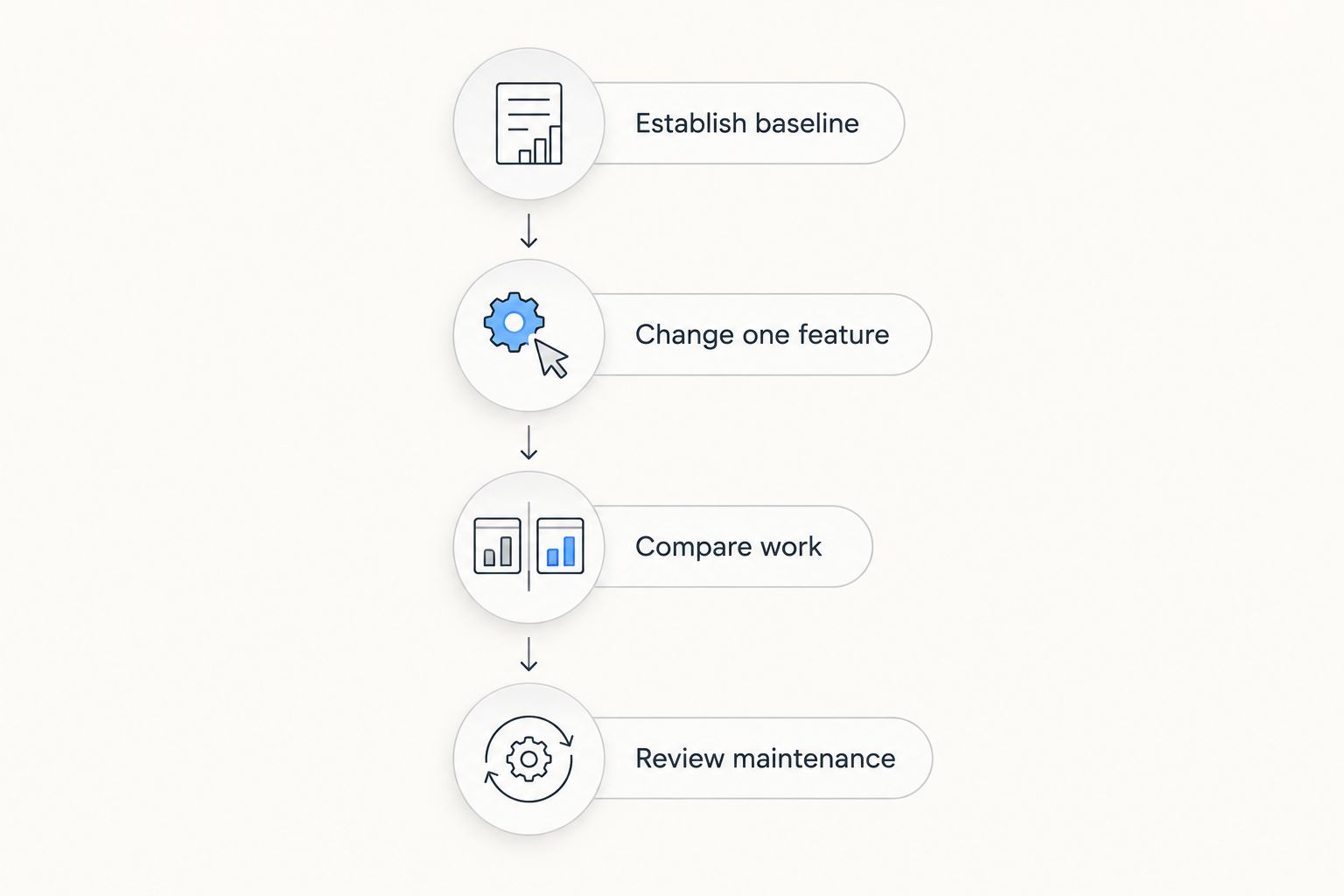
Define the outcome before changing the workspace, then assess performance and upkeep together.
For a 2026 pilot, agree on the decision rule in advance: retain the change when the evidence and operational experience justify it, revise it when problems are fixable, and remove it when it fails the brief. Do not select only the most flattering survey response.
Can nature-inspired finishes replace living plants?
Nature-inspired finishes can provide visual references to nature where planting is impractical. They do not inherit the productivity findings from experiments involving living plants.
When specifying floral wall murals, assess pattern scale, contrast and placement against the room's task: a prominent motif behind a monitor becomes part of the worker's visual field. Its decorative role is distinct from any claim about measured performance.
Best for: areas where you want a botanical reference without watering or plant-care access. The trade-off is evidential: a nature-themed surface is not a demonstrated substitute for the particular conditions examined in workplace research.
Ask for material samples and assess them in the intended position. Review reflected light, cleaning requirements and the amount of visual detail before specifying a whole wall.
What should go into the office design brief?
A useful brief connects the workplace problem, the proposed intervention and the evidence needed for approval. It does not start with an instruction to make the office greener.
For a Giant Leap office-design discussion, document:
- The work affected, including tasks requiring concentration or frequent conversation.
- Existing problems, supported by observations rather than aesthetic preferences alone.
- The proposed nature-related feature and who will encounter it during normal work.
- Practical constraints, including access, shading, cleaning and plant care.
- The measure used to judge the trial and the person responsible for reviewing it.
For a 2026 project, approve a testable brief before approving a visual concept. Renderings explain appearance; they do not establish comfort, maintenance performance or productivity.
Discuss your office design brief
Bring your workplace priorities, practical constraints and proposed pilot measures.
Does biophilic office design improve air quality?
Office plants are not a substitute for ventilation or source control. Laboratory findings about pollutant removal do not establish that ordinary office planting provides meaningful whole-room air cleaning under occupied building conditions.
Choose greenery for its supported workplace role, not as a replacement for building services. Keep ventilation assessment separate, especially when employees report stuffiness, odours or discomfort.
Is a green wall better than desk plants?
A green wall is not automatically better than desk plants for productivity. Its scale and visibility do not establish a stronger effect on work output.
Best for: a location where a large planted surface fits the space and has defined maintenance arrangements. Desk-area planting is better suited to a movable trial; a green wall introduces installation and access considerations that a small pilot need not take on.
FAQ
Can biophilic office design really improve productivity?
Yes, research on plant-enriched offices supports productivity benefits in the studied settings. The result does not guarantee the same improvement in every workplace or for every nature-inspired design feature.
Does biophilic office design increase productivity by 15%?
A productivity improvement of up to 15% was reported in the University of Exeter's account of research on plant-enriched offices. Treat it as a study finding, not a forecast for your organisation.
What's the best first step for a biophilic office project?
Identify the workplace problem and define a measure before choosing design features. Check glare, noise, comfort and maintenance constraints alongside your plans for greenery.
How long should an office greenery pilot last?
A 4-week pilot after 2 working weeks of baseline measurement is a practical starting proposal, not a validated minimum. Extend it when your workload or task cycle requires a longer comparison.
Can artificial plants deliver the same productivity benefits?
Equivalent productivity benefits are not established by research involving living plants. Assess artificial plants as a decorative choice rather than assuming the findings transfer.
Will indoor plants replace office ventilation?
No, indoor plants do not replace office ventilation or pollutant source control. Assess building services independently of planting decisions.
Is employee satisfaction enough to prove a productivity gain?
No, employee satisfaction and productivity are different outcomes. Record feedback alongside task completion, work quality or another relevant operational measure.
One last thing
Check the proposed design from the least-favoured occupied desk, not only from the entrance. If greenery is visible mainly to visitors while employees still face glare and distracting noise, the scheme has prioritised presentation over working conditions.
Use that desk-level check before your 2026 approval meeting. It exposes a mismatch that an attractive overall view can conceal.